Why Residential and Commercial Cleaners Need Different CRM Features
Eric Lamanna · November 6, 2026
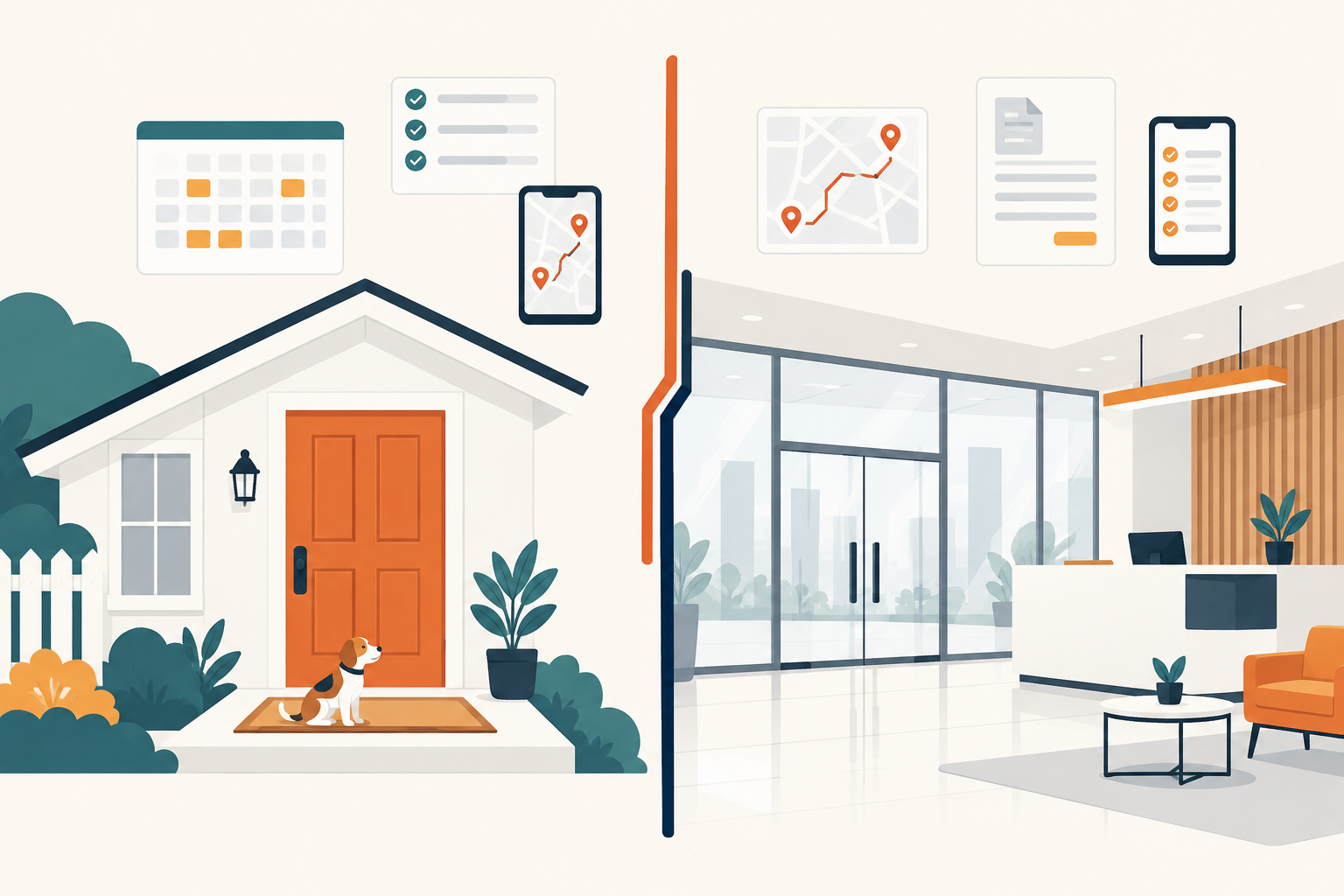
Sales reps with mobile CRM access meet quota 65% of the time, compared with 22% of reps without it. In cleaning, where the next quote gets written in a lobby, a driveway or a van, the mobility question is not a nice-to-have. It is the system of record.
Picking a CRM gets harder when the answer depends on what kind of cleaning the company sells. Residential and commercial are different businesses riding under the same industry heading. The CRM features that save a residential operator ninety minutes a day, like fast quotes from a phone, property quirks saved on the client card, and a recurring cadence that bends around rescheduling, are not the features that win a 160-day commercial pipeline. The commercial features that matter most, from multi-contact pipelines to net-30 collections, barely surface in a residential CRM. Owners who do both end up buying for one side and apologising to the other.
Here is how the needs actually split, and what to do if the business works both sides.
The Split Nobody Talks About in the Buying Process
A residential job starts with a web form and closes in days. A commercial job starts with a walk-through and closes in months. That difference alone reshapes every CRM requirement.
Residential buyers want a price now. They are comparing against two or three other maid services, and they will pick the one that answered first with a clean number. The CRM's job is to shorten the distance between inquiry and quote, remember every move-out from the duplex on Elm, and nudge the office when Mrs. Rivera has not had a visit in four weeks.
Commercial buyers want an RFP. They are evaluating a vendor they will keep for 12 to 24 months, and the decision sits with a facilities lead, a procurement officer and a CFO. The CRM's job is to keep the thread alive across those three people, track a long sales cycle without letting the deal go cold, and chase net-30 invoices that trail the service by a month.
Where Residential Pulls the CRM
Residential cleaners stretch a CRM in three directions.
Quote speed. The lead who gets a quote within an hour wins a disproportionate share of inquiries. A residential CRM has to produce a price from a bedroom count, a square footage and a recurring frequency in under a minute, usually from a phone. If the form on the site cannot write back to the CRM, the whole exercise becomes a copy-paste chore, and the lead buys from the maid service that answered first.
Property quirks. Residential service lives on the small details: the gate code, the dog that bites the vacuum cord, the bathroom nobody is allowed to enter. Structured client property records on the client card beat any amount of free-text "communication history." Fields have to be structured (key location, pet names, alarm code, supply closet) so the assigned cleaner sees them without hunting.
Recurring cadence that bends. Biweekly clients move to Thursdays. Monthly deep-cleans skip a month. The CRM has to carry an actual schedule object, not just an invoice reminder, and reschedule a recurring series without breaking the pricing or the route. Route optimisation is part of this, and good field routing can cut travel time by up to 28%.
Where Commercial Pulls It the Other Way
Commercial cleaning stretches the CRM toward depth instead of speed.
Multi-contact deals. A single commercial opportunity has a facilities manager, a property manager and an accounts-payable contact. A residential-style CRM carries one email per client. Commercial sales needs a company record with roles, so the follow-up that goes to procurement does not accidentally cc the janitor.
RFP timelines. The average commercial cleaning sales cycle runs about 160 days. That is five months of touches, a site walk, a proposal, a revision, a reference check and a start-date negotiation. The CRM has to carry stage definitions that match that cycle, not just the generic "lead, qualified, won," and remind the rep to send value-add material six months before the current contract expires.
Net-30 collection discipline. Commercial work gets invoiced after the month, paid on terms, and reviewed quarterly. Receivables aging has to live beside the client record, with automatic follow-up on day 15 and day 25. The U.S. employs more than 2.4 million janitors and building cleaners, and the recurring revenue behind that figure moves on contracts, not credit cards.
The Sales Pipeline Looks Different on Each Side
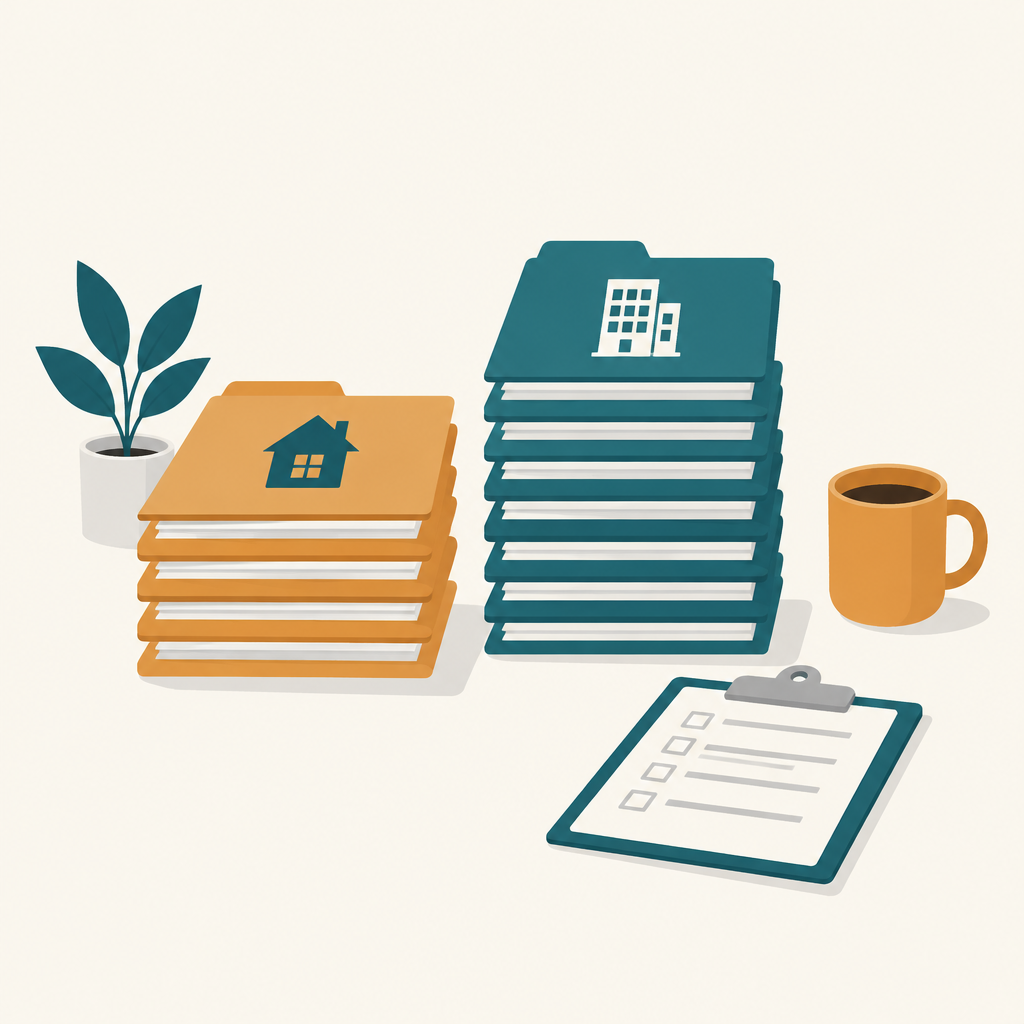
A residential cleaning sales pipeline is wide and shallow. Hundreds of leads a month, each worth a few hundred dollars a visit, most closing or vanishing within a week. The reports owners actually read are conversion-by-source and quote-to-booking time, not deal value.
A commercial pipeline is narrow and deep. Twelve or twenty opportunities, each worth $30,000 to $400,000 a year, each with a named champion and a known renewal date. Owners read win rates by stage, stall time per stage, and forecast accuracy. Those are different dashboards built on different data models, and most generic cleaning company CRM features chase one or the other, not both.
Payment and Cash Flow Tell on You
Payment mix is where this split shows up on the balance sheet. Businesses that take at least 30% of payments in cash maintain an average DSO of 21 days, compared with 47 days for businesses accepting less than 10%. Residential cleaners sit mostly in the first camp, with card on file, charged on day of service, cleared overnight. Commercial cleaners live in the second, with a net-30 invoice that gets chased on day 25.
A residential CRM assumes the payment closes with the visit. A commercial CRM assumes the payment opens a thirty-day collection clock. If the software bought cannot carry both, the side it does not serve shows up as a cash-flow problem a quarter later.
How to Choose When the Company Does Both
Three honest choices sit in front of an owner running both lines. Pick a residential-grade CRM and build the commercial pipeline on top of its deal stages, which is workable up to perhaps $500,000 a year of commercial. Pick a commercial-grade CRM and accept that the residential side will trade off some quote speed, which is reasonable when commercial is 70% or more of revenue. Or pick a platform built for cleaners that carries both patterns in the same system, with structured property records on one side and a longer deal pipeline on the other.
The practical test is cheap. Walk a vendor through three scenarios in a demo: a one-hour quote for a 2,400 sq ft recurring clean, a six-month pursuit of a 48-stop medical office contract, and a net-30 invoice that ages to day 25. Any CRM that stumbles on any of them will stumble on it every week for years.
Where to Go From Here
Three situations cover almost every owner working through this question.
Running mostly residential and feeling the current tool creak on property details and recurring reschedules: start with the CRM features overview written for cleaning companies, and audit how much of the daily friction is a data-model problem rather than a training problem.
Running mostly commercial and losing deals between walk-through and contract: map real stages against the five-month cycle, and ask whether current pipeline reports actually forecast or just describe. If the answer is the second, the next step is a CRM whose stage definitions survive a 160-day deal.
Running both lines and apologising to the half the current tool does not serve: compare the platforms that honestly carry both patterns, and read what switching actually takes before the next renewal window closes.